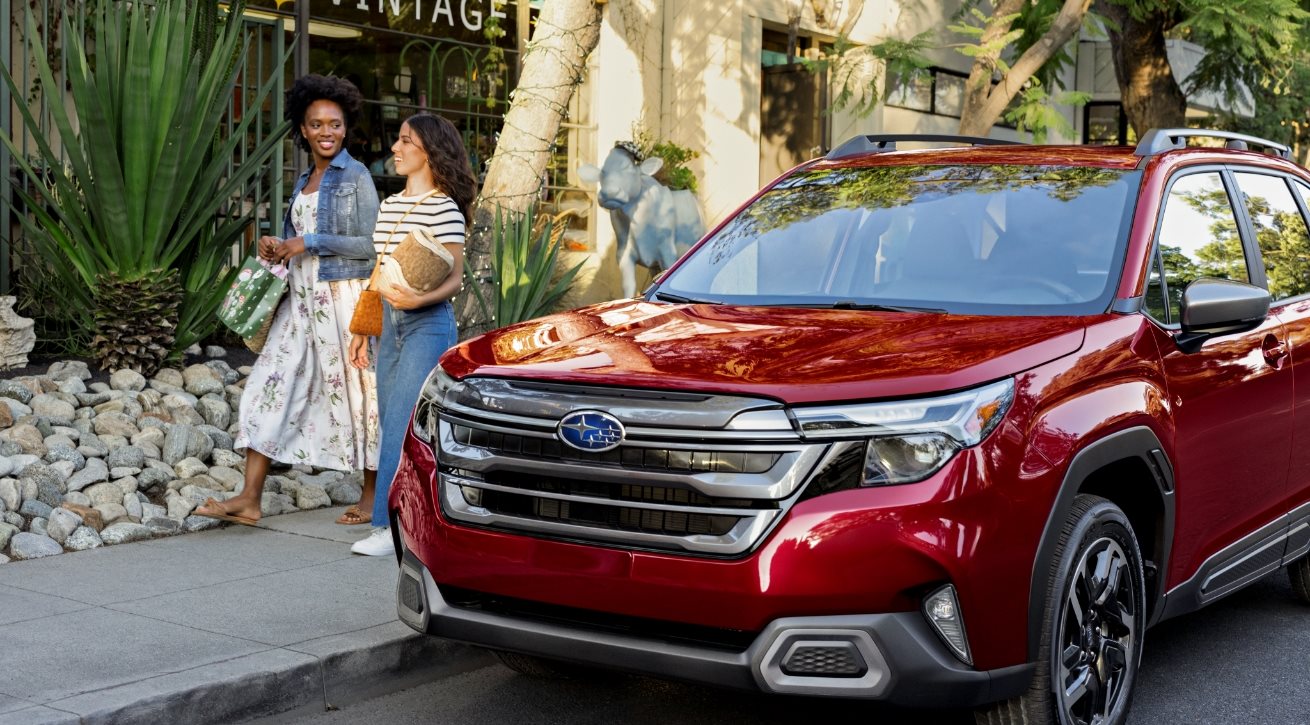
Subaru Forester vs. Toyota RAV4 comparison at Curry Subaru Kingston
Compare the Subaru Forester and Toyota RAV4 with Curry Subaru Kingston.

Subaru Vehicle Comparison

Subaru Forester Vs. Toyota RAV4

The Subaru Forester and Toyota RAV4 represent two of the most popular compact SUVs available in Ulster County, but they take distinct paths to everyday capability. Compare their powertrains, standard all-wheel drive availability, ground clearance, maximum cargo flexibility, and passenger comfort before deciding which one best matches your routine.

Specifications shown reference official OEM data for the 2026 Subaru Forester and 2026 Toyota RAV4. Features and equipment may vary by trim. Confirm current vehicle details with Curry Subaru Kingston.

At a Glance

Two Top Compact SUVs With Unique Priorities

The Forester emphasizes standard Symmetrical All-Wheel Drive, high ground clearance, panoramic visibility, and an expansive 74.4 cubic feet of maximum cargo capacity. The RAV4 focuses on hybrid powertrain availability, higher city fuel efficiency, and upright cargo capacity behind the second row.

Subaru Forester

74.4 cu. ft. Max Maximum interior cargo capacity

Subaru Forester

Standard AWD Subaru Symmetrical All-Wheel Drive

Toyota RAV4

37.8 cu. ft. Rear Cargo space behind 2nd row

Toyota RAV4

Available AWD Electronic On-Demand All-Wheel Drive

Key Differences

What Separates the Forester From the RAV4?

The most meaningful distinctions come down to drivetrain availability across trim levels, maximum cargo space with seats folded, second-row legroom, ground clearance, and outward driver visibility.

All-Wheel Drive System

Forester: Subaru Symmetrical All-Wheel Drive is standard across every trim level, delivering continuous power distribution to all four wheels.

RAV4: Front-wheel drive comes standard on entry trims; Electronic On-Demand AWD is an optional extra-cost feature.

Powertrain & Handling

Forester: Powered by a 180-horsepower 2.5-liter SUBARU BOXER engine (194-hp Hybrid option) paired with Lineartronic CVT.

RAV4: Utilizes a 2.5-liter 4-cylinder engine or hybrid system producing 219 to 236 horsepower depending on drivetrain configuration.

Cargo & Passenger Space

Forester: Offers a spacious 110.8 cu. ft. passenger volume with 39.4 inches of rear legroom and up to 74.4 cu. ft. max cargo space.

RAV4: Provides 37.8 cu. ft. of space behind the rear seats, expanding to 70.4 cu. ft. total cargo space when seatbacks are folded.

Ground Clearance & Visibility

Forester: Delivers 8.7 inches of ground clearance standard (9.3 inches on Wilderness), X-MODE, and tall window glass for low blind spots.

RAV4: Offers 8.1 to 8.6 inches of ground clearance depending on configuration, with Multi-Terrain Select on select AWD trims.

Side-by-Side

Subaru Forester vs. Toyota RAV4 Comparison

Use this snapshot to see how the two compact SUVs differ across core vehicle specifications.

Comparison Point Subaru Forester Toyota RAV4
Standard Engine 2.5L SUBARU BOXER 4-cylinder 2.5L 4-cylinder Engine / Hybrid
Horsepower 180 hp (Gas) / 194 hp (Hybrid) 203 hp (Gas) / 219 hp (Hybrid)
Transmission Lineartronic CVT 8-Speed Automatic / eCVT
All-Wheel Drive Standard Symmetrical AWD Available Electronic On-Demand AWD
Ground Clearance 8.7 to 9.3 inches 8.1 to 8.6 inches
Cargo Space (Seats Up / Folded) 29.6 cu. ft. / 74.4 cu. ft. max 37.8 cu. ft. / 70.4 cu. ft. max
Rear Seat Legroom 39.4 inches 37.8 inches
Driver Assistance EyeSight Driver Assist Technology Toyota Safety Sense suite
Primary Strength Standard AWD, rear legroom, maximum cargo volume Rear cargo volume with seats up, highway efficiency

Everyday Driving

How These Differences Affect Daily Use

Understanding how dimensions and features translate into practical advantages around Kingston, Saugerties, and Rhinebeck.

Hudson Valley Commutes

The Forester provides upright seating with tall window glass for excellent sightlines along Route 9W. The RAV4 offers a confident highway ride with solid commuter efficiency.

Winter Driving

Standard Symmetrical AWD and up to 9.3 inches of clearance give Forester drivers extra peace of mind during heavy snowfall. RAV4 buyers must select AWD trims for all-weather traction.

Cargo Flexibility

Folding the Forester's rear seats opens up a vast 74.4 cubic feet for home project supplies or bulky camping equipment. The RAV4 holds slightly more luggage behind upright second-row seats.

Passenger Comfort

The Forester offers 39.4 inches of rear legroom and a wide door opening for easy rear-seat access. The RAV4 provides 37.8 inches of legroom for adult back-seat passengers.

Choosing Your SUV

Which SUV Better Matches Your Routine?

Consider which combination of standard AWD, passenger comfort, total cargo capacity, and fuel economy fits your daily lifestyle.

Consider the

Subaru Forester

The Forester may align more closely with your needs when you place a higher priority on:

  • Standard Symmetrical All-Wheel Drive across all models
  • 8.7 to 9.3 inches of ground clearance for snow and unpaved terrain
  • Higher maximum cargo volume (74.4 cu. ft.) with rear seats folded
  • More rear legroom (39.4 inches) and greater total passenger space
  • Tall window glass design for expansive outward sightlines

Consider the

Toyota RAV4

The RAV4 may align more closely with your needs when you place a higher priority on:

  • Higher rear cargo space behind five passengers with seats upright (37.8 cu. ft.)
  • Available hybrid models focused on high fuel economy
  • Option to choose front-wheel drive on entry models
  • Toyota Safety Sense driver assistance suite
  • Slightly higher base gas engine horsepower (203 hp)

For many Kingston-area drivers, the Forester's biggest distinctions are straightforward: standard Symmetrical All-Wheel Drive, up to 9.3 inches of ground clearance, 74.4 cubic feet of max cargo space, and a passenger-friendly cabin designed for everyday visibility.

A test drive at Curry Subaru Kingston can help you evaluate seating comfort, rear legroom, sightlines, cargo utility, and how the Forester performs on local road conditions.

Comparison Questions

Subaru Forester Vs. Toyota RAV4 FAQs

Common questions from drivers comparing these two leading compact SUVs.

Cargo Capacity

Which SUV offers more maximum cargo volume?

The Subaru Forester provides up to 74.4 cubic feet of maximum cargo capacity with the rear seats folded down, compared to 70.4 cubic feet in the Toyota RAV4. However, the RAV4 holds 37.8 cubic feet behind upright second-row seats versus 29.6 cubic feet in the Forester.

Drivetrain

Does the Toyota RAV4 include standard all-wheel drive like the Forester?

No. Subaru Symmetrical All-Wheel Drive is standard across all Forester trims. The Toyota RAV4 comes standard with front-wheel drive on base models, making all-wheel drive an added-cost option.

Ground Clearance

How does ground clearance compare between the Forester and RAV4?

The Subaru Forester offers 8.7 inches of ground clearance standard, with the Wilderness trim raising it to 9.3 inches. The Toyota RAV4 provides between 8.1 and 8.6 inches depending on the trim level.

Legroom

Which compact SUV has more second-row legroom for passengers?

The Subaru Forester provides 39.4 inches of rear legroom, giving adult passengers more stretch-out space than the Toyota RAV4, which provides 37.8 inches.

Engine Options

What engine configurations are available on these two models?

The Subaru Forester comes standard with a 180-hp 2.5-liter SUBARU BOXER 4-cylinder engine alongside an available Forester Hybrid. The Toyota RAV4 offers both a 2.5-liter 4-cylinder gas engine and a 2.5-liter Hybrid powertrain.

Driver Sightlines

How does driver visibility compare between the two SUVs?

The Subaru Forester is uniquely engineered with tall window glass, narrow roof pillars, and an upright seating position that provides panoramic outward sightlines and lower blind spots than the RAV4.