Subaru Forester VS The Competition
Compare the Subaru Forester vs. Toyota RAV4 and Honda CR-V
View Forester InventorySubaru Forester vs. Toyota RAV4 & Honda CR-V
Choosing between today's compact SUVs often comes down to a few important questions:
- How does the Subaru Forester compare with the Toyota RAV4?
- Is the Forester a better fit than the Honda CR-V?
- Which SUV gives you standard all-wheel drive without adding an option package?
- Which compact SUV combines hybrid efficiency with AWD?
The Subaru Forester has a straightforward answer to the AWD question: Symmetrical All-Wheel Drive comes standard on every Forester trim. The lineup also combines standard EyeSight® Driver Assist Technology with a versatile cabin, available hybrid power and the capability of the Forester Wilderness.
If you're comparing the Forester with the RAV4 or CR-V, looking at the differences in price, drivetrain, space, safety and capability can make it easier to determine which SUV fits your needs.
Starting MSRP Comparison [1]
Subaru Forester Base:
$29,995
Toyota RAV4 LE:
Honda CR-V LX:
$31,900
$30,920
Top Trim MSRP
Subaru Forester Touring:
$39,995
Toyota RAV4 Limited:
Honda CR-V Sport Touring Hybrid:
$43,300
$42,550
Why it matters: The Forester enters the segment at a lower starting price than the RAV4 and CR-V while making standard AWD part of every trim. That gives shoppers a consistent starting point instead of requiring an upgrade to access all-wheel-drive capability.
Proven Reliability & Long-Term Value
A compact SUV needs to make sense beyond the initial purchase. The Forester combines Subaru's standard AWD philosophy with a lineup that includes gas, hybrid and Wilderness models, giving shoppers several ways to prioritize efficiency, everyday versatility or additional capability.
Hybrid All‑Wheel Drive
Subaru Forester Hybrid:
Standard, Every Trim
Toyota RAV4 Hybrid:
Honda CR-V Hybrid:
AWD Availability Varies by Trim
AWD Available
Consumer Reports Recognition
Subaru Forester:
Top Compact SUV, 13 Years Running
Projected Resale Value
Subaru Forester:
#1, Compact SUVs – J.D. Power
96% of Foresters sold in the last 10 years are still on the road today, providing another reason to consider the Forester when you're thinking about long-term ownership rather than just the day you drive your new SUV home.
Handling Advantage: Standard All-Wheel Drive
Standard All‑Wheel Drive
Subaru Forester:
Standard, Every Trim
Toyota RAV4:
Honda CR-V:
AWD Available on Select Configurations
Available, Not Standard
Ground Clearance
Forester Wilderness:
9.3 Inches
Forester:
Toyota RAV4:
8.7 Inches
Up to 8.6 Inches
Max Towing Capacity
Forester Wilderness:
3,500 lbs.
Toyota RAV4:
Honda CR-V:
1,500 lbs.
1,500 lbs.
Interior Space & Everyday Usability
A compact SUV has to accommodate more than a driver and a daily commute. The Forester's upright design helps create an open passenger compartment while providing the flexibility you need for passengers, groceries, luggage and weekend gear.
Total Interior Volume [2]
Subaru Forester:
Up to 110.8 cu. ft.
Toyota RAV4:
Honda CR-V:
Less Than Forester
Less Than Forester
Why it matters: The Forester combines useful interior space with standard AWD and an available Wilderness model, making it a versatile choice for everyday driving and weekend adventures throughout the Hudson Valley.
Advanced Safety: Confidence Comes Standard
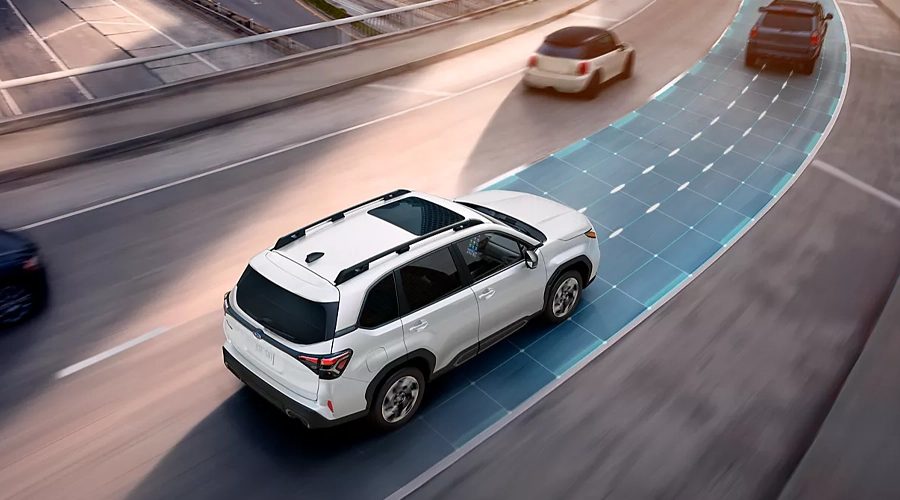
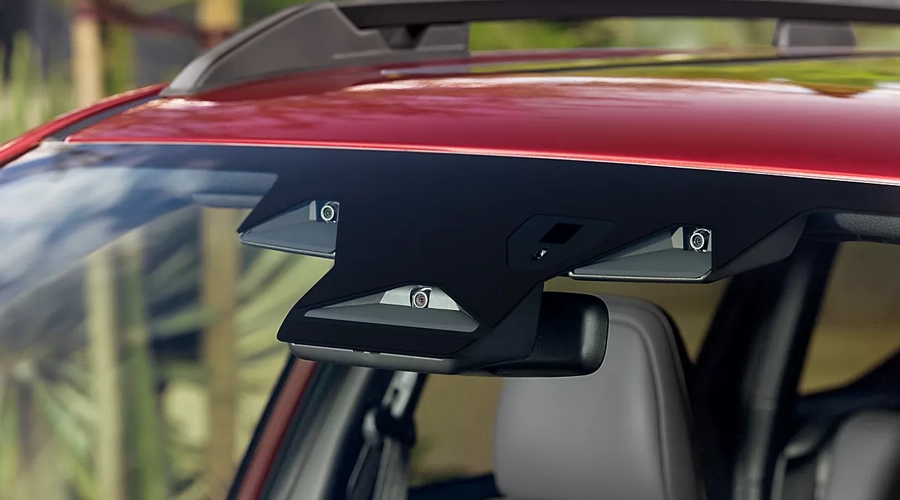
Standard EyeSight® Driver Assist Technology
Every 2026 Forester includes EyeSight® Driver Assist Technology. The system incorporates driver-assistance features designed to help with situations such as adaptive cruise control, lane-centering assistance and forward collision avoidance.
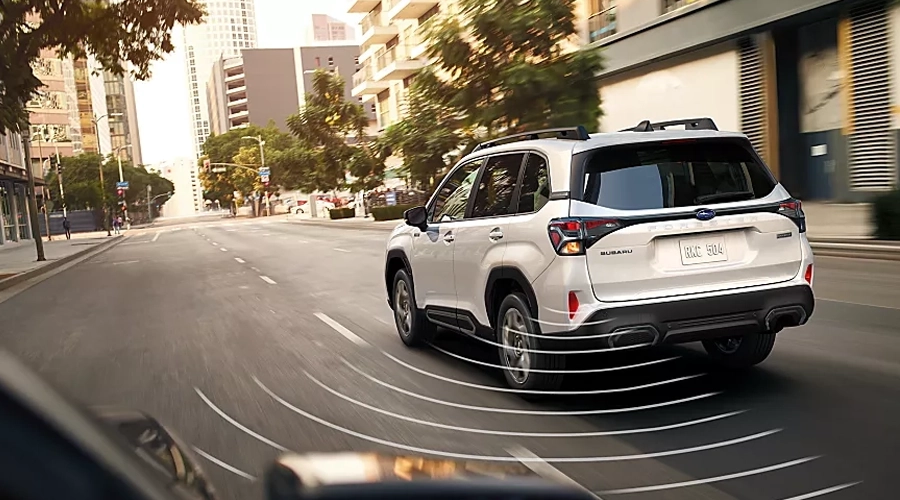
All-Around Awareness
Depending on trim, Forester drivers can also access features including Blind-Spot Detection with Rear Cross-Traffic Alert, Reverse Automatic Braking and additional driver-assistance technology.
360-Degree Surround-View Monitor
Available on higher trims, the Surround View Monitor provides a bird's-eye perspective around the vehicle to help make parking, maneuvering and navigating tight spaces easier.
Forester vs. RAV4 vs. CR-V: Common Questions
Q: Does the Subaru Forester come with standard all-wheel drive?
A: Yes. Symmetrical All-Wheel Drive is standard on every 2026 Forester trim, including the Forester Hybrid and Wilderness.
Q: Is the Subaru Forester less expensive than the RAV4 and CR-V?
A: The 2026 Forester starts at $29,995 MSRP. The 2026 Toyota RAV4 LE starts at $31,900, while the 2026 Honda CR-V LX starts at $30,920. Pricing excludes applicable taxes, fees and other charges.
Q: Does the Forester Hybrid have standard AWD?
A: Yes. The 2026 Forester Hybrid includes standard Symmetrical All-Wheel Drive across its hybrid lineup. Subaru also lists a range of up to 581 miles on a single tank.
Q: Which Forester is best for off-road driving?
A: The Forester Wilderness is the most trail-focused version. For 2026, it has 9.3 inches of ground clearance, standard dual-function X-MODE, front underbody protection and 3,500 pounds of towing capacity.
Q: How much interior space does the Subaru Forester have?
A: The 2026 Forester offers up to 110.8 cubic feet of passenger space and up to 74.4 cubic feet of cargo volume.
Test Drive the Subaru Forester
If you're comparing:
- Subaru Forester vs Toyota RAV4
- Subaru Forester vs Honda CR-V
- Compact SUVs with standard AWD
- Hybrid SUVs with standard AWD
- Subaru Forester Wilderness capability
- Best compact SUV for Hudson Valley driving
[1] MSRP does not include destination and delivery charges, tax, title, and registration fees. Destination and delivery includes handling and inland freight fees and may vary in some states. Prices, specifications, options, features, and models subject to change without notice. Starting and Top Trim MSRP reflect published non-plug-in trims at time of publication. Toyota RAV4 and Honda CR-V pricing and specifications are set by their respective manufacturers and are subject to change without notice. See your retailer for more information.
[2] Per Subaru of America's published comparison, Forester interior passenger and cargo volume exceeds that of the Toyota RAV4 and Honda CR-V. Manufacturer-published interior volume figures use each brand's own measurement methodology.